
Robots Will Not Fully Replace Investment Bankers
In the not-too-distant future, the state of many industries will include employees that work for the machines and those that work with the machines. The rest are likely to be displaced by the robot revolution. Job security in many fields over the coming years will be at a premium as companies look to save capex by inserting machines into more and more tasks.
Those seeking job security are likely to work in fields that require high-touch, emotion-fueled, human-to-human interpersonal skills (something that is actually getting more rare these days) and highly-technical training. Although most investment bankers match this job description, none are fully sheltered from the impending machine job-pocalypse.
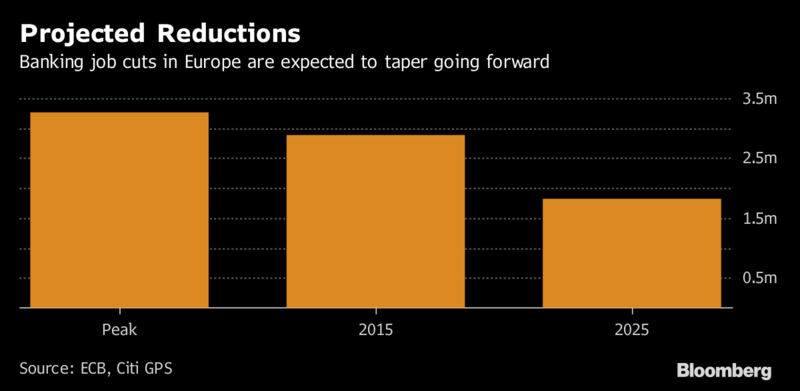
While there is likely to be a large amount of displacement, it is unlikely that robots will steal all the jobs in investment banking. This is especially true in the middle-market where deals are driven more by emotion than bits and bytes. Many traditionally-minded investment bankers in boutique shops are still operating in spreadsheets and Outlook—ignoring job-enhancing technology like advanced CRMs, marketing automation and artificial intelligence.
As the machines continue to augment—all other comparables being equal among investment bankers (bedside manner, negotiation ability and soft interpersonal skills)—the investment bankers with the best chops for running advanced processes via automation with the right technology will win. The level of disintermediation in investment banking is likely to be driven more by transaction type than any other factor.
The rise of Initial Coin Offerings (ICOs) and the flexibility of Reg A+ are two examples that will continue to require less human work and input than say a $50M sell-side M&A transaction of a mid-west software development shop. No, most traditional businesses sold to strategics and private equity firms will still require the folksy charm of a solid intermediary.
On the other hand, raising millions in a public offering of some type (IPO, ICO, Reg A+, etc.) is much less likely to need or receive the type of human intervention required in a sell-side deal. The cost of job-stealing robots—while cheaper than paying the wages of an actual human—in many cases will come at a premium, so as to justify the service, development and job displacement they create. As the price of high-tech, job-killing software and hardware in investment banking goes up, it is almost equally as likely that the fees charged by investment bankers will simultaneously decrease or be augmented.
Falling fees is bad for many boutiques, but fine for those who can operate at some scale when it comes to sheer deal quantity. When it comes to machines, we will all need to learn to live, work and operate for and with them. When done well, the robots will ultimately enhance the scale, quality and scope of the work we do. The one thing we cannot completely do is ignore the value-add current and future technology will provide to various investment banking deal processes.
Where Automation Is Already Reshaping the Deal Process
Automation is not a future threat—it is already embedded in the workflows of forward-thinking advisory firms. Document review, financial modeling templates, CRM pipeline tracking, and even first-draft CIM analysis are tasks increasingly handled by software. The question for today’s banker is not whether automation will touch their practice, but how quickly they will integrate it and how they will differentiate on the tasks machines cannot yet replicate.
Consider the diligence process. Historically, junior analysts spent weeks manually extracting figures from hundreds of documents. Today, transaction document intelligence tools can surface key terms, flag anomalies, and cross-reference data across a virtual data room in a fraction of the time. That shift does not eliminate the analyst—it elevates their role toward interpretation, client communication, and judgment calls that require context machines lack.
The Human Edge: What Machines Cannot Easily Replicate
The argument that robots will not fully replace investment bankers rests on a specific set of competencies:
- Relationship management. Capital markets are built on trust. A seller handing over their life’s work requires a confidant, not a chatbot. The ability to read the room, manage anxiety, and shepherd principals through an emotionally charged process remains a distinctly human skill.
- Contextual judgment. Machines optimize within defined parameters. Knowing when to walk away from a deal, how to reframe a valuation dispute, or which buyer is actually the right cultural fit for a target requires nuanced judgment that algorithms do not yet possess.
- Creative deal structuring. Earn-outs, seller notes, rollover equity, and hybrid consideration structures are crafted through negotiation and relationship intelligence, not statistical inference.
- Regulatory navigation. Compliance-aware workflows can flag issues, but the interpretive work of advising a client through evolving regulatory frameworks still requires a licensed professional who can be held accountable.
A Practical Framework for Bankers Adapting to Automation
Rather than treating automation as an existential threat, practitioners can use a simple three-tier framework to position themselves effectively:
- Automate the repeatable. Pipeline tracking, document templates, data room indexing, and financial model scaffolding are prime candidates for software-assisted workflows. Freeing hours here creates capacity for higher-value work.
- Augment the analytical. Use AI-assisted tools for initial screening, comp analysis, and document summarization—but apply human judgment to the outputs before they reach a client or counterparty.
- Protect the relational. Client origination, negotiation, and closing depend on interpersonal trust. Invest disproportionately in the skills machines struggle to replicate: listening, persuasion, and stakeholder management. For firms exploring how to add value in mergers and acquisitions, this three-tier lens is a useful starting point.
Transaction Type Will Determine the Pace of Displacement
Not all deal types face equal automation risk. Standardized, high-volume transactions—think small-cap equity raises, online lending platforms, or token issuances—are far more susceptible to disintermediation than complex, bespoke advisory mandates. A $200M sell-side process involving a founder-owned business, multiple bidders, and a nuanced quality-of-earnings conversation is simply not a workflow that a machine can run end-to-end today.
The shift driven by fintech will continue to compress margins on the commodity end of the market while leaving room for skilled advisors on complex transactions. Boutiques that specialize deeply—by sector, deal size, or transaction type—are better positioned than generalists who compete primarily on price. If you are assessing how automation might affect your own transaction, start by mapping your deal process to understand where human judgment remains the critical variable.
Frequently Asked Questions
Will AI replace junior investment bankers first?
Junior roles that are primarily analytical—building models, formatting decks, pulling comps—face the most near-term automation pressure. However, junior positions also serve as the training ground for developing the relationship and judgment skills that define senior bankers. Firms are more likely to restructure junior workflows around automation than to eliminate the roles entirely, at least in the medium term.
Which investment banking functions are most resistant to automation?
Business development, lead advisory on founder-owned transactions, negotiation strategy, and client relationship management are the most resistant functions. These depend on trust, discretion, and contextual judgment that current AI systems cannot reliably replicate at the level clients expect in high-stakes deals.
How should a boutique firm think about technology investment?
Start with the workflows that consume the most analyst time without producing proportional client value—document review, data room organization, and initial screening. Tools that improve turnaround speed and accuracy on those tasks free senior bankers to spend more time on origination and advisory, which is where boutiques differentiate. Explore purpose-built investment banking software rather than adapting generic enterprise tools.
Does automation change how fees are structured?
Potentially, yes. As technology reduces the labor hours embedded in certain deal processes, clients may push back on legacy fee structures. Advisors who can demonstrate clear value—particularly on the judgment and relationship dimensions—will be better positioned to defend their economics than those competing primarily on process execution.
Considering a transaction?
Speak with our advisory team about your sell-side, buy-side, or capital needs — in confidence.